
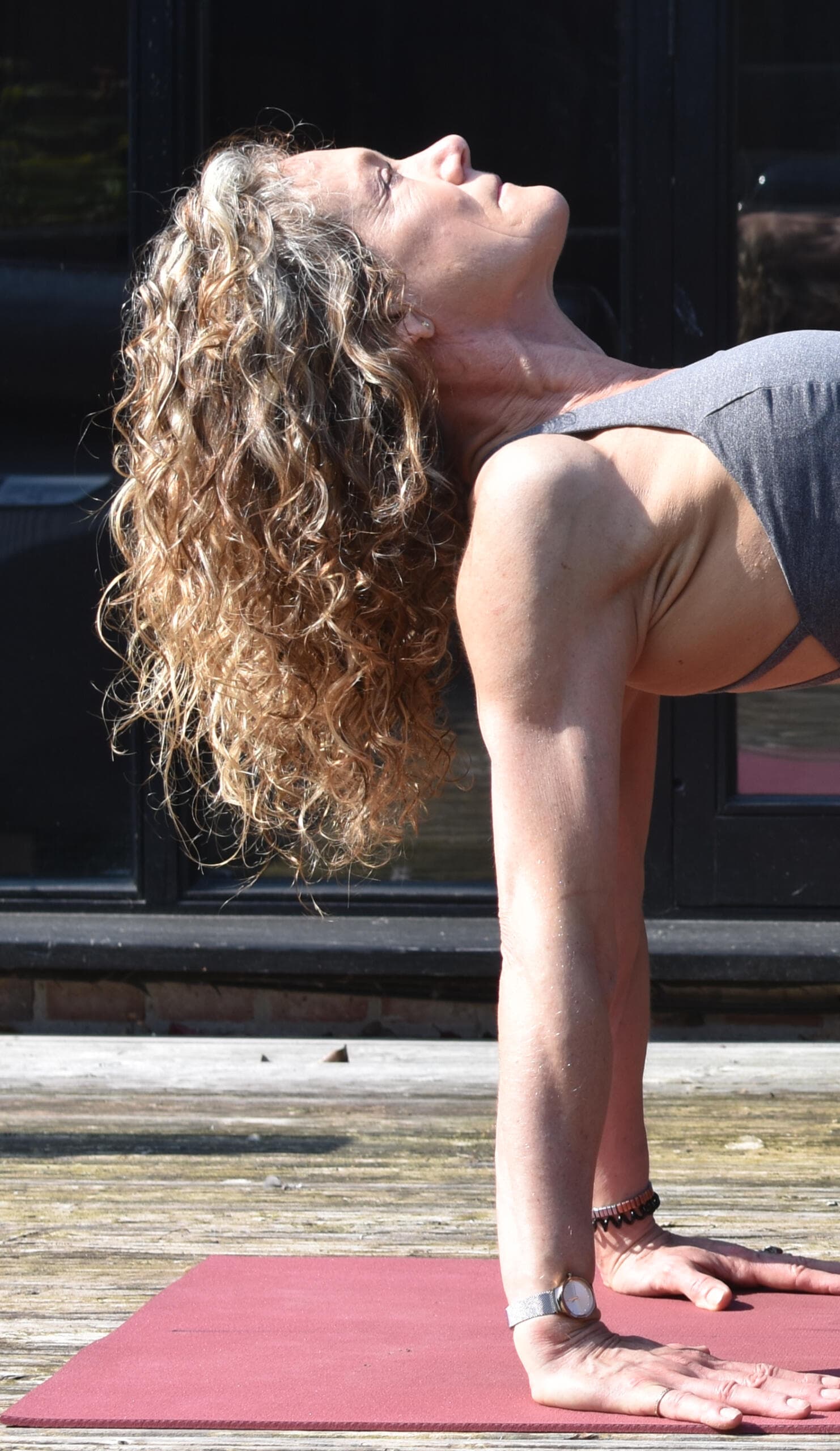
When you pick up a dumbbell and curl it toward your shoulder, that's a concentric contraction — the muscle shortens under load. When you slowly lower it back down, that's an eccentric contraction — the muscle lengthens under load. And it's this second phase that most people rush through, missing out on enormous benefits.
What Is Eccentric Exercise?
Eccentric exercise emphasises the controlled lengthening of muscles. In yoga, we do this constantly: lowering slowly from plank to the floor (chaturanga), descending into a squat, or gradually folding forward with straight legs. Every time you resist gravity on the way down, you're training eccentrically.
Why It Matters
Greater Strength Gains — Research consistently shows that eccentric training produces greater increases in total muscle strength than concentric training alone. Your muscles can handle approximately 20-40% more load eccentrically than concentrically.
Injury Prevention — Eccentric strength is critical for joint stability. Weak eccentric control is a major factor in knee injuries, ankle sprains, and hamstring tears. Building this capacity protects you during everyday activities — walking downstairs, stepping off a kerb, catching yourself when you stumble.
Tendon Health — Eccentric exercises are now the gold standard treatment for tendinopathies (tendon injuries). The controlled lengthening stimulus promotes tendon remodelling and healing in ways that other exercise types simply don't achieve.
Better Balance and Control — Eccentric strength gives you the ability to decelerate smoothly. This is why yogis who practice controlled transitions between poses develop remarkable balance and body control.
How Yoga Builds Eccentric Strength
In a well-taught yoga class, you'll spend significant time in eccentric phases:
- Lowering from standing to seated — controlling the descent through your legs
- Chaturanga — the slow lowering from high plank to low plank
- Forward folds — gradually lengthening hamstrings under the weight of your torso
- Warrior transitions — the controlled deepening of lunges
The beauty of yoga is that these eccentric movements are woven throughout the practice. You build this crucial strength without even thinking about it.
Practical Tips
- Slow down the lowering phase — Count to 4 or 5 as you lower into any position
- Don't collapse — If you can't control the descent, modify the movement
- Practice regularly — Eccentric strength develops with consistent practice
- Listen to your body — Eccentric exercise can cause more delayed onset muscle soreness (DOMS) than concentric exercise, especially when you're new to it
Next time you're in a yoga class, pay attention to how many movements involve controlled lowering. You might be surprised at just how much eccentric training yoga naturally includes.